Featured

Blog 1: Innovation and Product Development

Innovation and Product Development

Innovation and Product Development Blog Post

Innovation and Product development: IP and OSD compared

Our basic capitalist interests make us believe that in order to incentivize people to innovate, we must reward them with financial control over their inventions. However, major industrial and cultural innovations require many brilliant minds across the globe, not a few hundred engineers in a single lab. Open source technology has proven to be an invaluable tool for innovation and global market growth. In this blog post we will explore Tesla’s philosophy on open-source, market-driven economics and its impact on the electric vehicle market. 

Elon Musk, the founder of Tesla, opened up many of their proprietary patents for ethical and commercial reasons. When Elon Musk first announced that he was going to make his patents open source, the Tesla stock dropped dramatically. [1] At first glance it seemed that this strategic move was merely for the benefit of Earth’s climate, not car owners, investors or stockholders. Many investors believe patents to be assets and thus relinquishing those assets to competitors would be bleeding value. And yet, Elon Musk’s decision was not a purely altruistic one; he believes that opening up Tesla’s patents will actually increase Tesla’s value. As the global production of vehicles approaches 100 million per year, electric vehicles only form less than 1% of that number. [2] By granting access to its battery and automotive technology, the company is hoping that more vehicle manufacturers will adopt the technology, thereby growing the market size, market awareness and infrastructure to support EV’s. Further, if other companies adopt the technology of Tesla’s supercharging network, Tesla will have managed to construct charging networks compatible with their technology for next to no costs. Finally, nearly all Americans can agree that competition incentivises excellent service and product. But before Tesla opened up its patents, it was in a race all by itself. 

Tesla’s bold plan to make its patents open source has had an enormously positive impact on the company, the EV market and planet as a whole. This has given many different companies in the automotive space the technology to more rapidly advance their electric car infrastructure and accelerate the speed at which the electric car network develops. Ten years ago, it was difficult  to justify taking an electric car on a road trip with less than 10,000 charging stations around the US. However, now there are more than 60,000 individual chargers, with nearly 13,000 of those contributed by Tesla. [3] The growth of this network is extremely beneficial to Tesla as well as the electric vehicle market as a whole. More charging stations encourage people to buy more electric cars, not to mention the free marketing that comes from having people drive by a charging stations full of Teslas or other EVs.  Craig Buschmann from TechCrunch sums up Tesla’s philosophy well: “As the pie grows, everyone gets a larger slice.” [4] indicating that Tesla’s revenue will continue to grow as the entire market grows.​ Electric cars serve as a renewable energy alternative to traditional gas cars, which contribute significantly to Greenhouse gas emissions. In fact, Greenhouse gas (GHG) emissions from transportation account for about 29 percent of total U.S. greenhouse gas emissions, making it the largest contributor of U.S. GHG emissions. [5] If the entire transportation community can examine and improve Tesla’s electric technology, it gives the US the opportunity to eliminate a large portion of their emissions. In a matter as serious as this, it is in everyone’s best interest to try and help the environment. Thus, Tesla’s decision to make their patents open source has encouraged EV technology to develop rapidly and has helped our global climate crisis as well.  
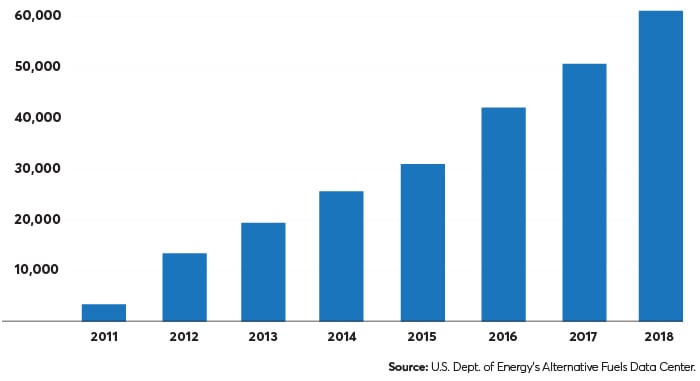
Number of Electric Charging Outlets in the US

Tesla is an example of how open-source patents incentivise innovation in stagnating industries. And when it comes to Tesla, it is not just car owners that benefit but our entire planet. Their industry leadership allows them to assume a riskier strategy of making their patents open source. However, since there is so much room to explore in the EV market, Tesla’s decision will ultimately benefit them as their market share continues to increase and the overall network effect greatly benefits Tesla, other EV companies, and the environment. I hope that other companies will follow in Tesla’s footsteps and make their patents open source, recognizing that they can still earn profits while advancing the community as a whole.

1. TSLA Interactive Stock Chart | Tesla, Inc. Stock. (n.d.). Retrieved from https://finance.yahoo.com/chart/TSLA
2. Iea. (n.d.). Electric vehicles – Tracking Transport – Analysis. Retrieved from https://www.iea.org/reports/tracking-transport-2019/electric-vehicles
3. Plungis, J. (2019, November 12). How the Electric Car Charging Network Is Expanding. Retrieved February 17, 2020, from https://www.consumerreports.org/hybrids-evs/electric-car-charging-network-is-expanding/
4. Buschmann, C. (2016, May 27). Tesla’s patent strategy opens the road to sustainability for transport and for itself. Retrieved February 23, 2020, from https://techcrunch.com/2016/05/26/teslas-patent-strategy-opens-the-road-to-sustainability-for-transport-and-for-itself/
5. Carbon Pollution from Transportation. (2019, June 10). Retrieved February 23, 2020, from https://www.epa.gov/transportation-air-pollution-and-climate-change/carbon-pollution-transportation
Blog 9: Final Reflection


When I enrolled in this course in the fall, I had heard a bit about open source, but I was excited about the opportunity to learn more. I understood open source as strictly a technological idea. I knew that it allowed different contributors to edit code and collaborate to improve a problem. Furthermore, I wondered about the motivation behind open source. Why would someone offer up their code or their work in order for free? If someone had a great idea, why would they not privatize it and try to profit from it? However as we progressed, I realized the wide array of applications that open source can have in our lives and the ways it can improve day-to-day life. Through the various topics we explored, culminating in the final project, I realized that we must be having more discussions about how to take advantage of all the incredible solutions that people are developing and how they benefit the “common good”. 

The topics we covered in this course included, but were not limited to: innovation and product development, inequality, energy, education, food and agriculture, communication, health, infrastructure, and climate change and mitigation. Combining our engaging class discussions with relevant research for our blog posts, I felt that I was constantly surprised and impressed by the different ways that open source could manifest itself in each of these different sectors of our world. In a sense, the structure of the class represented an idealized open source community where we all worked individually to present ideas to the class before using those ideas as a platform for discussion. It was also fascinating to see how the open source community and open source innovations are continuing to be made around us, demonstrating the fluidity of the space. One topic that particularly resonated with me was Health. In my blog, I discussed the Johns Hopkins Center for Systems Science and Engineering and their most recent efforts against coronavirus. While this virus has severely impacted many people and significantly altered our educational experience, it was exciting to witness the progress being made in the open source community, especially in order to help resolve this crisis. Johns Hopkins’s open data collection platform was a quintessential example of how the use of open source can benefit society significantly.

While I was very interested in the topics that I researched and that I heard about from peers in class, I felt that the experience in the class that resonated with me the most was the expert interview we conducted for our final project. We reached out to Mauricio Cordova, the founder of FairCap, an open source water filter, in order to find out more about his company and how he integrates open source into his product. Mauricio had an incredible background, describing to us all the different Maker’s Fairs and open source workshops he had attended all around the world. Having grown up in Peru, a country that struggles to this day with access to clean water, he had a particular intrinsic motivation for this project. Nonetheless, his social entrepreneurship and resourcefulness were inspiring to my group members and me. His use of open source allowed him to create the best, most affordable product in order to benefit thousands of people and help resolve the world-wide water crisis. 

Overall, I really enjoyed being part of this class, and I am excited to see how open source can continue to benefit people in the future. Learning in such a collaborative environment from Professor Etienne, Laura, and my peers was a great experience and great exposure to a new topic. I believe that open source has the potential to become even more prevalent in society, and understanding such a new topic will be beneficial as it grows in popularity.

Blog 8: Climate Change/Infrastructure

On February 7, 2018, the Partnership for Resilience and Preparedness launched their map-based platform, titled “PREPdata”, to provide easy access to the information that adaptation decision-makers need to assess vulnerability and build resilience to climate change. [1] This platform compiles data from a wide array of reliable sources and provides them to the public with the intention of making people more aware of both past and future climate conditions. The Partnership explains that the biggest challenge facing climate change mitigation is the lack of accessibility to reliable data. The goal of PREPdata is to “open the lines of communication between data providers and users–and by providing easy access to a curated set of data and tools, which is driven by user input.” [1] As an open source platform, PREPdata creates a much more collaborative and effective approach to help governments and citizens understand both the past effects and future risks of climate change. 

PREPdata is a map-based, open data online platform that allows users to access and visualize spatial data reflecting past and future climate, as well as the physical and socioeconomic landscape for climate adaptation and resilience planning. [1] The platform is continuing to evolve through the input of PREP partners and PREPdata users. It is a flexible tool for climate adaptation planning, designed to address many of the gaps and challenges adaptation practitioners face. Some of the features of the site include a customizable, visual, map-based platform, active curation of datasets, a commitment to global coverage, and user-needs based strategy for platform development, utilizing the knowledge and network of the partners and platform users to enable continuous improvement. [1] PREPdata is primarily run by the World Resources Institute and Future Earth, yet also accumulates data from a number of private and public institutions including NASA, the Department of Commerce, and the National Oceanic and Atmospheric Administration. 

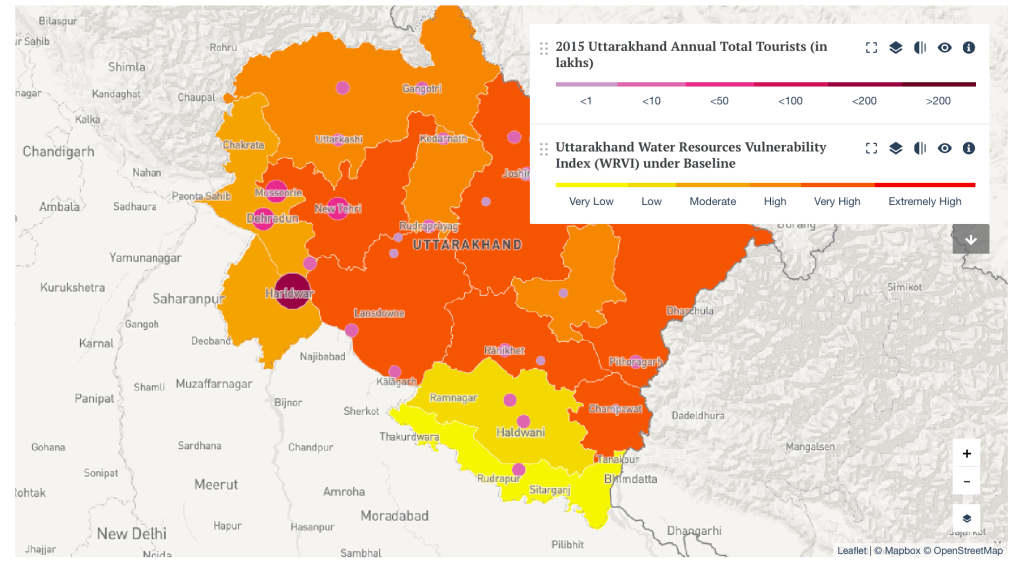
PREP published several articles about local governments that have used their data in order to better prepare themselves for climate change. For example, Sonoma County in California has applied PREPdata to support climate resilience planning, with a focus on changes that could affect the wine-growing and tourism-dependent region. In India, PREPdata is being used to support climate adaptation plans in two Indian states – Uttarakhand and Madhya Pradesh – through the development of state-level dashboards to track key indicators of climate hazard, vulnerability and adaptation. [2] The Uttarakhand project was particularly interesting to me as they used a wide array of data found through the site in order to measure the potential prosperity of the region. They considered factors like temperature change and the likelihood of landslides, floods, and other natural disasters in order to measure socio-economic effects on the region and the potential to grow tourism. [2] All this would not have been possible if it had not been for PREPdata accumulating all different types of resources that may not have been available to the local North Indian government. 

Map from the Uttarakhand project that shows how Total Tourism intersects with Water Vulnerability

Since climate change is a global issue, rather than relying on your own government’s info. PREP works with governments across city, state, and national levels in order to use the platform as a resource in their attempts to prepare for climate change. This allows governments and organizations to compile data from a wide array and look at it in a very advanced interactive map platform in order to better understand a wide array of environmental effects ranging from temperature rises and greenhouse gases to natural disasters. Making this platform open source is extremely advantageous as we all work together to protect our planet.

Bibliography

  1. “PREPdata About.” Partnership for Resilience and Preparedness, http://www.prepdata.org/about.

2. “Uttarakhand: Climate Change in the Tourism and Agriculture Sectors.” Partnership for Resilience and Preparedness, http://www.prepdata.org/stories/uttarakhand-climate-change-in-the-tourism-and-agriculture-sectors.

3. Will, Bugler. “New Open-Source Data Platform for Climate Resilience Launches Today: Acclimatise – Building Climate Resilience.” Acclimatise, 7 Feb. 2018, http://www.acclimatise.uk.com/2018/02/07/new-open-source-data-platform-for-climate-resilience-launches-today/.

Blog 7: Health

Since December 31, 2019, when the first case of COVID-19 was reported in the Wuhan province in China, the pandemic has spread globally at a rapid rate. The novelty of this disease has caused people to constantly search for information about where it is, how it spreads, and how to prevent it. While there are several reputable news sources out there, there seems to be a disconnect between the true number of cases and varying speculations read on Twitter accounts or blogs. Open-source solutions have helped the world stay more informed and safer during this global crisis. 

The Johns Hopkins Center for Systems Science and Engineering has recently developed an open-source interactive dashboard whose goal is  “to provide researchers, public health authorities, and the general public with a user-friendly tool to track the outbreak as it unfolds.” [2] The platform pulls data from various sources, primarily DXY (an online platform run by members of the Chinese medical community), and cross-references these sources in order to ensure accuracy. [1] The system breaks down the effects on a country-level, province level in China and the city level for US, Canada, and Australia. Because the technology is open source it is able to interact and gather data from countries and software systems around the world that speak different computer languages. By collecting data from a wide array of sources and updating it every 15 minutes, the dashboard serves as one of the world’s most reliable and up to date sources of information regarding the quantity and location of cases. Scientists, hospitals and governments can use this trusted data to make informed decisions about how to best react and prepare for the virus. [1]

In addition to numerical data, genomic information about the virus has also been shared via open-source platforms allowing scientists and doctors around the world to work together. In one particular case found in Seattle, medical professionals recognized a mutation in the strain. This mutation, while only representing a miniscule detail that may not truly affect the manifestation of the disease, allows doctors to track the strain more precisely and figure out where it has spread, how it has adapted and how to limit its effect. [3] The strain was shared on Gisaid, an open-source genome sharing platform. This sort of genetic analysis isn’t new, in and of itself. Researchers traditionally publish their work primarily through academic journals. But the explosion of genomic data available on Gisaid, and the speed with which it’s uploaded, creates new opportunities to bridge the gap between public health and academia allowing us to act quickly and thus save lives. [3]

COVID-19 has affected and will continue to affect every single nation on planet Earth. Our interdependent global economy suffers every day that we fail to keep the virus under control. By using open source platforms we can help cull the virus through accurate reporting and scientific collaboration.

Bibliography:

  1. Woodward, M., Douglas, B., Brescia, E., & Anderson, E. (2020, March 27). Open collaboration on COVID-19. Retrieved from https://github.blog/2020-03-23-open-collaboration-on-covid-19/

2. Dong, E. (2020, February 19). An interactive web-based dashboard to track COVID-19 in real time. Retrieved from https://www.thelancet.com/journals/laninf/article/PIIS1473-3099(20)30120-1/fulltext

3. Finley, K. (2020, March 26). Data Sharing and Open Source Software Help Combat Covid-19. Retrieved from https://www.wired.com/story/data-sharing-open-source-software-combat-covid-19/

Blog 6: Communication

Due to COVID-19 and its highly infectious nature, governments have asked schools and workplaces to operate remotely. These measures have contributed to a sharp rise in Zoom video conference usage. For example, in one day, the Zoom app was downloaded 343,000 times with about 18% of those downloads originating in the United States [2]. Further, despite the panic and the precipitous decline in the S&P 500 index, Zoom’s stock has increased 74% this year alone [3]. However, Zoom has major security flaws that users are unable to fix because it is a privately owned closed-source platform. Fortunately, there are open-source alternatives that provide a more secure, adaptable alternative. 

Current Zoom Stock YTD Performance

Throughout Zoom’s history it has experienced many security flaws and has been slow to react because it is a large publicly-owned company with closed source software. In July 2019  security researcher Jonathan Leitschuh released a public report regarding a bug that allows nefarious hackers to easily hack Macbook cameras. Leitschuh only went public after Zoom refused to act for over 90 days, leaving their users at risk. Because Zoom is closed source, the entire user base was forced to wait until the sluggish company could react. More recently, The Los Angeles Times documented a Zoom security issue that occured in Conejo Valley, a school district twenty minutes from my home [4]. During a virtual school administrator meeting, several unknown users joined the meeting where they yelled racial slurs and used the screen sharing function to share wildly inappropriate photos. Not only did this make participants extremely uncomfortable, it also caused already stressed educators to question the security of their Zoom meetings [4]. Since Zoom is closed source, organizations are completely dependent on Zoom’s security system and cannot even look at the code to see where their vulnerabilities lie. As a result, some grade-school teachers have shied away from teaching their youngest students on this platform. Considering the stress our education systems are already under, it is tragic that they must also experience fear when using softwares that allows them to communicate directly with their students. 

Fortunately there are alternatives to Zoom that allow for more customized, secure experiences because they are open source. One of these alternatives is Jitsi, an open source platform that allows users to build personalized secure video conferencing solutions. Jitsi was started nearly 15 years ago and has “survived by customizing Jitsi for different clients to meet their needs.” [1] Jitsi customization options include robust security features allowing it to adapt quickly as hackers and other nefarious actors become more advanced. Jitsi Meet uses hop-by-hop encryption. This means that anything that you send traveling to the server is encrypted, then decrypted on the server, re-encrypted and sent to everyone who is meant to receive it [1]. When the code is open, anyone who has doubts about questionable practices has the option to check  themselves whether such practices actually occur. Emil Ivov, the original author of Jitsi explained that having the same security options with other applications is “ a matter of negotiation and/or trusting third party auditing agencies.” [1] Whereas with Jitsi, the firm that employs them can correct security bugs and make the connection as secure as possible.  In a time where fear is rampant, it is valuable for administrators to understand how their software works and where their vulnerabilities are making Jitsi and other open-source softwares a better option than their closed source competitors. 

Zoom and other video-conferencing solutions follow a network effect meaning that people join because their networks are already using the platform. Thus, it is our responsibility as educated individuals to host our video conferences using open-source technologies that are safer for us as individuals and as a society at large.

Bibliography:

  1. Belu, A. M. (n.d.). Jitsi video conferencing – open source and privacy enhancing. Retrieved from https://dataethics.eu/interview-emil-ivov-jitsi-video-conferencing-snowden/

2. Konrad, A. (2020, March 14). Exclusive: Zoom CEO Eric Yuan Is Giving K-12 Schools His Videoconferencing Tools For Free. Retrieved from https://www.forbes.com/sites/alexkonrad/2020/03/13/zoom-video-coronavirus-eric-yuan-schools/#74f655b74e71

3. Novet, J. (2020, March 18). Zoom CFO explains how the company is grappling with increased demand. Retrieved from https://www.cnbc.com/2020/03/18/zoom-cfo-explains-how-the-company-is-grappling-with-increased-demand.html

4. Xia, R. (2020, March 25). USC, school districts getting ‘Zoom-bombed’ with racist taunts, porn as they transition to online meetings. Retrieved from https://www.latimes.com/california/story/2020-03-25/zoombombing-usc-classes-interrupted-racist-remarks

Blog 5: Agriculture

In 2015, Caleb Harper the MIT Media Lab Research Scientist came up with personal food computers. He initiated this as part of his Open Agriculture Initiative. Personal food computers are automated, indoor, hydroponic gardens that can download and replicate conditions for specific vegetables or other plants. The computers are typically made up of a climate controlled glass box with LED lighting used to replicate the sun and digitally controlled water-sprayers. The software for these computers can be transmitted through an inexpensive Raspberry Pi. Open Source farming is a fascinating new development that would allow humans to be more efficient in the quality and quantity of food they consume. This movement will help people grow fresh food all around the world no matter the weather conditions or their socio-economic standing. 

Open source farming would be extremely helpful in improving the quality of food for the average consumer. At the TED conference in Geneva, Harper seized the audience’s attention by telling them that the average apple in a supermarket is 11 months old. [1] Furthermore, many farmers use pesticides in order to protect their plants from harmful insects. However, these pesticides can seriously affect the integrity of the plants and are dangerous for humans. Online gardens could inject new creativity into cultivation and yield new vegetable varieties optimized for flavor or nutritional value rather than for size and shelf life. [1] The customizable conditions that a personal food computer can control a wide array of factors that can even affect the freshness and taste of the produce. Harper mentions that one of the biggest discrepancies in the food system is the lack of communication about how to grow. [1] By building an online network through his personal food computers, he makes it easier for small-scale farmers to replicate conditions that led to a successful planting. 

Another aspect that open source agriculture and personal food computers could help address is more adequately distributing the quantity of food we produce. In the United States, food waste is estimated at between 30-40 percent of the food supply. This estimate, based on estimates from USDA’s Economic Research Service of 31 percent food loss at the retail and consumer levels, corresponded to approximately 133 billion pounds and $161 billion worth of food in 2010. [2] However, if farming were catered more towards a community rather than mass production as it is now, we would be able to more accurately assess how much food to produce and be able to limit waste. Furthermore, personal food computers, since they are relatively inexpensive, would also allow us to provide fresh food in urban areas that may not have the access that other Americans would to high quality, fresh ingredients. Also, these food computers significantly limit water waste. Marc Oshima, the CMO of Aero-Farms (a company that has commercialized this idea) boasts proudly about the environmental benefits: 95 percent less water used per kilogram of produce, zero insecticides, all fertilizer captured and recycled. [1] These personal food computers only need water and electricity from a building and thus can be placed nearly anywhere. [3] Also, since the plans to build one of these computers and the “recipes” are provided for free by MIT, it is even more accessible to the general community. 

In these ways, open source agriculture can significantly help us improve the quality of the produce that we consume as well as more adequately serve the amount of food that people consume by reducing waste. While these computers have some limitations at the moment, I believe that their potential to help the community is incredible. Hopefully, in 20 years, people around the world are growing their own high quality produce from inside their home.

Bibliography:

  1. Johnson, N. (2018, September 6). The open-source movement to hack your arugula. Retrieved from https://grist.org/article/the-open-source-movement-to-hack-your-arugula/

2. Food Waste FAQs. (n.d.). Retrieved from https://www.usda.gov/foodwaste/faqs

3. Hansman, H. (2015, August 3). What Is a Personal Food Computer? Retrieved from https://www.smithsonianmag.com/innovation/what-is-a-personal-food-computer-180956085/

Blog 4: Education

Blog 4: Education and the control of knowledge:  IP and OSD solutions compared

Across the world and even the United States, there is a great education disparity between communities. All of us enrolled at the University of Virginia have unbelievable access to educational resources. With this great privilege comes great responsibility to promote other mediums that help resolve education inequality. Open source technology advances the standard of education in a community because it allows students from different socio-economic backgrounds access to more accurate, current knowledge. 

Our current education system and patented teaching materials contribute to education inequality. Traditionally, education is passed forward, meaning we learn from teachers who were taught the material at an earlier point. This constant passing down of knowledge is productive in a society that has access to generations of  meaningful educational resources. However, the communities that do not have access to these resources often lag behind causing many generations to suffer. The difference is amplified on a global scale where people in the US have significantly better access to educational resources than people in developing countries. Approximately 1 in 3 children around the world lack access to a quality education [2]. This means that nearly 130 million students haven’t mastered basic subjects like reading and math. [2]. Much of this can be attributed to limited access to quality materials, including patented closed source knowledge like textbooks. The price of textbooks has skyrocketed over the past decade: Textbook costs increased 88 percent between 2006 and 2016, according to the BLS report [6]. As textbook prices rise many lower-income communities are forced to educate themselves with out of date materials because they cannot afford newer editions. A new study by the UNESCO Global Education Monitoring (GEM) Report shows how secondary school textbooks from the 1950s until 2011 missed or misrepresented key priorities now shown as crucial to achieve sustainable development [5]. Fortunately, there is a wealth of information on the internet, and many people have made the push to create open source educational resources in order to make it easier for kids to learn helpful technical skills. 

Open source technology is a leading force in dissolving education inequality because it helps make knowledge more accessible and cheaper. Traditionally, access to schools was limited by geography and wealth. However, Google and other organizations are trying to change that standard. Google.org continues to support several open source educational resources, contributing more than $110 million over the past five years to help close gaps in education [1]. One organization that Google.org supports is The Foundation for Learning Equality, a non-profit which has committed to making education available to people around the world through a variety of means. The Foundation’s goal is to disrupt the cycle of poverty by attacking the “lack of education” [2].  In order to do so, they have developed a free open source application called Kolibri that makes videos, textbooks, and lessons available to learners available around the world offline. This is the second iteration of this application backed by Khan Academy which gives students access to over 9,000 videos and 26,000 interactive exercises that they can watch in over 160 countries completely free of charge [1]. This advanced open source platform is often provided to users for free in the form of a Raspberry Pi, a small, inexpensive (~$25) computer that can connect via wifi and can hold a wealth of information. Learning Equality mentions that they specifically provide these solutions to communities that are lower income and do not have easily accessible Internet.

Overall, the use of open source technology in education has begun to make an enormously positive impact in spreading educational resources to various regions around the world that need them most. Often times in these regions, even if they have access to educational materials, they are outdated or in a different language. By using the internet and open source technology, we can provide people with more current and accurate information with the hopes of progressing their communities at a faster rate.

Bibliography

  1. Gosselink, B. H. (2017, March 21). Helping to close the education gap. Retrieved February 26, 2020, from https://www.blog.google/outreach-initiatives/google-org/helping-close-education-gap/
  2. Home: Learning Equality. (n.d.). Retrieved from https://learningequality.org/
  3. Johnson, S. (2018, December 27). ​Learning Equality Scores $5M From Google To Bring Edtech Offline – EdSurge News. Retrieved February 26, 2020, from https://www.edsurge.com/news/2017-03-21-learning-equality-scores-5m-from-google-to-bring-edtech-offline
  4. The Untapped Potential of Open-Source for Education. (2019, June 10). Retrieved from https://news.elearninginside.com/the-untapped-potential-of-open-source-for-education/
  5. Out of date textbooks put sustainable development at risk. (2017, May 1). Retrieved from https://en.unesco.org/news/out-date-textbooks-put-sustainable-development-risk
  6. Valle, G. D. (2019, March 6). A single college textbook can cost more than $100. It didn’t use to be this way. Retrieved from https://www.vox.com/the-goods/2019/3/6/18252322/college-textbooks-cost-expensive-pearson-cengage-mcgraw-hill

Blog 3: Energy

While fossil fuels and other non-renewable sources have dominated the energy sector in the past, renewable energy has become a much more viable option in recent years. According to the Center for Climate and Energy Solutions, renewable energy is the fastest-growing energy source globally where 24% of the energy generated in 2015 came from renewable sources such as biomass, geothermal, solar, hydro, wind, and biofuels. This is expected to increase to 31% by 2040 and will heavily depend on a number of factors including the development of technologies to make these energy sources cost-effective.[i]

Closed sourced, proprietary technologies have created many hurdles in the renewable energy sector. Up until very recently, renewable energy operators have relied on closed-source technologies that were created and distributed by the original equipment manufacturers. Unfortunately these softwares were optimized to manage the specific equipment, not the overarching energy solution. These proprietary softwares are also extremely expensive to license and very slow to adapt to the energy sector’s needs. Further, each of these proprietary equipment softwares speaks a different language. Arjan R. Stam, the director of network management at Alliander (a premiere Dutch energy company) explains that “As utilities we don’t cooperate much, we don’t have the pleasure of sharing information with each other.”[ii] He continues that, “Nowadays it takes a long time to bring a new station online… in large part because of the need to integrate the various technologies in a power station with the existing infrastructure. New code has to be written to get parts to talk with one another.” In these ways, closed-source software is limiting the renewable energy sector’s efficiency and adaptability as well as increasing the cost of expansion and innovation. 

In order to minimize costs and grow as quickly as possible, renewable energy firms like A&S Energie have implemented open source solutions to great success. A&S Energie is a Belgian biomass plant that supplies electricity to 55,000 households. For years, A&S Energie suffered from a dependence on high-cost, “largely manual, error-prone and time consuming process[es]” where human operators were forced to record data. [iii] This outdated system only produced readily available data for three months. Any data older than that had to be manually uploaded into a SCADA system. But A&S was able to replace their solution with Factry Historian which features an open-source, time-series database as well as an open-source dashboard for management and operators to use. Operators have always known that in order to predict energy needs, minimize costs and have equipment run optimally, data is required. This is especially true when working with nature as the energy source. Energy like wind, hydro, or solar are not constant and therefore require operators to adapt their equipment regularly to changes in the environment. Now that A&S Energie’s database is open-source, all of their data is readily accessible to plant managers, operators, consumers as well as other renewable energy companies. Rederik Van Leekckwyck, Factry’s Project Lead for A&S Energie, reports that A&S Energie save 10% per day on reporting by using a full-open source software stack.[iv] Further, having access to all of the data at once has allowed them to catch errors in their system and avoid extremely costly downtime. 

SAM Open Source is another example of how open source technology has elevated the renewable energy space. Recently, The U.S. National Renewable Energy Lab (NREL) has made all of the source code for their System Advisor Model (SAM) open source. SAM allows utility companies, small consumers and large companies to execute detailed, accurate financial analysis on their energy consumption. SAM has been free to use for many years but by going open-source individual users (consultants, companies, real estate developers) can adapt the code to their own needs. [v] Further, because the source code is available to read, advanced users can see how the models work underneath the hood, thus allowing them to decide whether or not SAM is a good fit for them. Lastly, SAM’s open-source code allows the community to fix bugs and new features creating a culture and system of innovation in the notoriously slow-moving renewable energy industry. 

Climate change has taken center-stage worldwide as we are beginning to see the negative effects our dependence on non-renewable sources of energy are having on our weather and environments. Many industrious entrepreneurs have been hard at work on renewable energy companies to change Earth’s course, but they are encountering many technological hurdles. By moving towards open-source solutions, engineers, plant managers, financial institutions and governments will be able to communicate data faster, easier and more transparently which will give us a better chance at saving our planet. 

Works Cited

1. “Renewable Energy.” Center for Climate and Energy Solutions, 16 Dec. 2019, www.c2es.org/content/renewable-energy/.

2. Finley, Klint. “To Go Green, the Energy Industry Goes Open Source.” Wired, Conde Nast, 12 Oct. 2019, http://www.wired.com/story/go-green-energy-industry-open-source/.

3. POWER. “Why Open Source Works for the Renewable Energy Sector.” POWER Magazine, 29 Aug. 2018, www.powermag.com/blog/why-open-source-works-for-the-renewable-energy-sector/.

4. van Leeckwyck, Frederik. “How Factry’s Industrial Historian Solution Helps A&S Energie Generate Electricity Efficiently.” InfluxData, 20 June 2018, www.influxdata.com/resources/how-factrys-industrial-historian-solution-helps-as-energie-generate-electricity-efficiently-faster-and-with-more-confidence/.

5. “Home.” NREL System Advisor Model (SAM), sam.nrel.gov/about-sam/sam-open-source.html

Blog Post 2: Inequality

Open source solutions are relatively novel, and thus exposure to them is limited. However, if we are able to make this data and information more accessible, open source has the potential to serve as an extremely useful source of information to diminish inequalities and place people on a level playing field. Open data can help citizens recognize racial and socioeconomic injustices and work with the government to correct them, just as was the case in Kennedy v. City of Zanesville.

It was clear that for many years white people in Muskingum County had significantly better access to clean water than non-white people, particularly African-Americans. After 50 years of disparity in treatment, the African-American population in Zanesville, although small, was given a voice against the blatant inequality. [i] In 2008, the law firm Relman, Dane & Colfax took up the case and began investigating. These qualified individuals were familiar with open information and knew how to access and use the information in order to assist them in their case. During the course of the case, President Obama’s “Transparency and Open Government” initiative came to fruition, encouraging more readily available access to government data that was previously held private. [ii] Thus, open data allowed Relman, Dane & Colfax to reveal the injustice and clear inequality between people of different races in Zanesville. As one of the lawyers on the case states, “The easier it is to access data, and the more people that can access data without having to pay for it, the more egalitarian society we will have.” This legal team effectively used the data as leverage to benefit the community. This demonstrates how open data can encourage governments to create better conditions for its citizens.

While open data can be extremely useful in helping resolve inequality crises, the main reason it has not helped more people is the lack of education surrounding the topic. Many people do not know how to access the data, and thus cannot demand it from the gatekeepers of this data, whether it be the government or corporations. Linda Villarosa discusses in a New York Times article the prevalence of HIV in the South now. There is a large discrepancy in HIV cases between cities in the South and New York City, a place where HIV first broke out in the US. Villarosa explains, “The South also has the highest numbers of people living with H.I.V. who don’t know they have been infected, which means they are not engaged in lifesaving treatment and care — and are at risk of infecting others.” [iii] While some of these issues stem from systemic failures, it is important that people around the country have equal access to information and other resources to help them combat life threatening illnesses. Many of the same healthcare services are available to people in the South as the North. However, it is clear that people in these Southern cities do not have access to the same information regarding the various treatments for HIV. Similar to treating city-wide HIV, if the population has a greater knowledge of the open data services available, we could create the social expectation that we should have greater access. People should not have to demand information from the government, rather it should be their right to use information that can benefit society.

It is clear that improved access to open data has the ability to greatly benefit society in a number of ways. By giving people better access to data, citizens gain the right to make more accurate, informed decisions. Furthermore, this creates an environment where governments and corporations can foster a sense of trust with people. The transparency associated with open data creates more accountability within society and helps eliminate inequalities.

I. Rogawski, C., Verhust, S., & Young, S. (2016). Ohio, USA: Kennedy v. City of Zanesville. Open Data Impact. Retrieved from https://odimpact.org/files/case-studies-us-kennedy.pdf

 II. Transparency and Open Government. (n.d.). Retrieved from https://obamawhitehouse.archives.gov/the-press-office/transparency-and-open-government

III. Villarosa, L. (2017, June 6). America’s Hidden H.I.V. Epidemic. Retrieved February 20, 2020, from https://www.nytimes.com/2017/06/06/magazine/americas-hidden-hiv-epidemic.html